
Stainless Steel Stud Bolts for Valves: Why Valve Manufacturers Prefer This Fastener Solution
Meta Description: Wondering why valve factory owners widely pick stainless steel stud bolts for valves? Learn installation benefits, load performance & cost advantages of stainless steel stud bolts in valve assembly.
Valve manufacturing involves strict requirements for sealing, structural stability and long‑term reliability. When valve factories select supporting fastening parts, stainless steel stud bolts for valves always become the top choice of many factory owners.
Many new buyers wonder: among hex bolts and other common fasteners, what makes stainless steel stud bolts stand out for valve assembly?
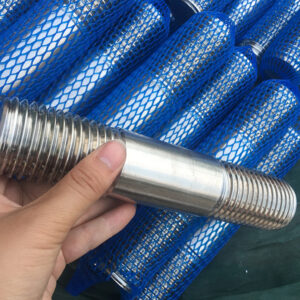
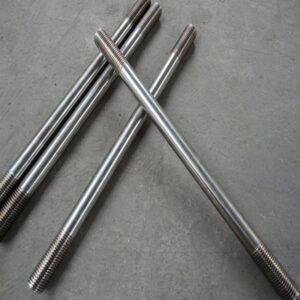
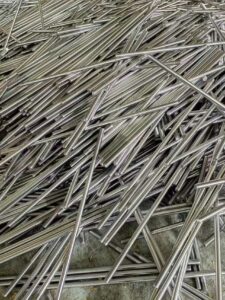
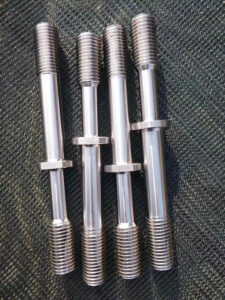
Stainless steel double‑end stud mounted on industrial flange valve | stainless steel stud bolts for valves mounted on valve flange
Stainless steel double‑end stud bolts are the type with threads on both ends and a plain unthreaded shank in the middle. This is the most common style of stud bolts for valve flange assembly. This article breaks down the core advantages of stainless steel stud bolts for valves, covering installation convenience, stress‑bearing performance and total‑cost savings for valve production and on‑site maintenance.
Simple Installation of Stainless Steel Stud Bolts for Valves Saves Assembly Time
The most prominent advantage of stainless steel stud bolts for valves lies in its installation‑friendly structure.
Valve flange assembly often happens in narrow operating spaces. Workers may have limited room to swing wrenches for conventional hex‑head bolts.
With double‑end stud bolts, you screw one threaded end into the valve body first. After placing the flange and gasket, you only need to put nuts onto the other exposed threaded end.
This workflow cuts extra assembly steps. It greatly shortens installation time during mass production inside valve workshops. It also brings huge convenience for later field maintenance and part replacement.
https://tjzxcfastener.com/stainless-steel-double-ended-bolts/
Most valve factories prefer ASTM A193 B8 stainless steel stud bolts for valves. This material grade matches high corrosion‑resistance and mechanical property demands for industrial pipeline valve systems.
Stainless Steel Stud Bolts for Valves Deliver Uniform Force Distribution and Anti‑Loosening Performance
Sealing failure and flange leakage are serious failures for industrial valves. Improper fastener selection is one frequent cause of these troubles.
Stainless steel stud bolts for valves, especially double‑end stud styles with a solid middle shank, can spread tightening force evenly across the flange surface.
When you torque the two‑end nuts, tensile stress distributes along the whole stud instead of concentrating on partial positions. It offers higher overall load‑bearing capacity against pulling force and torque impact.
Even under pipeline vibration, temperature swing and pressure fluctuation, this fastening structure maintains stable clamping pressure for gaskets. It effectively reduces risks of nut loosening and medium leakage.
Force distribution comparison diagram: double‑end stud vs hex bolt on flange joint | force distribution of stainless steel stud bolts for valves on valve flange
Many valve engineers choose stainless steel stud bolts for valves exactly for this reliable anti‑loosening and sealing‑guaranteed performance. For gate valves, globe valves and check valves working in chemical and water treatment pipelines, stable clamping force cannot be ignored.
Stainless Steel Stud Bolts for Valves Reduce Production and After‑Sales Maintenance Costs
Cost control matters greatly for valve manufacturers. Fastener supporting cost affects both factory profit margin and end‑user total expenditure.
Compared with custom special bolts, double‑end stainless steel stud bolts for valves adopt mature and simple manufacturing processes.
Mass‑produced standard studs keep unit production cost at a reasonable level. When valve factories purchase supporting fasteners in bulk, they can obviously lower accessory procurement expenses.
Cost saving does not stop at the manufacturing stage. For end clients running pipeline projects, these studs simplify overhaul and gasket replacement work.
You do not need to take down the whole valve body during maintenance. Only removing nuts is enough for gasket inspection and update. It cuts labor cost and system downtime loss for industrial operators.
When valve factories equip finished products with qualified stainless steel stud bolts for valves, their finished valves gain stronger market competitiveness on price and practicability.
Suitable Working Conditions for Stainless Steel Stud Bolts for Valves
Stainless steel double‑end stud bolts fit most flange‑connected industrial valves, including gate valves, ball valves, globe valves and check valves.
They perform well in humid environments and mildly corrosive medium conditions. Different stainless grades satisfy different project requirements.
https://tjzxcfastener.com/astm-a193-b8-threaded-rods/
304 stainless steel stud bolts suit general water and air pipeline systems. For chemical, marine and heavy‑corrosion scenarios, 316L stainless steel stud bolts provide enhanced anti‑corrosion capability.
Please note that double‑end studs with middle plain shank differ from full‑threaded continuous studs. Per ASME B18.31, double‑end studs keep a smooth unthreaded shank in the center, which is the mainstream choice for valve flange connection. Full‑thread studs have threads running through the whole length.
For ultra‑high‑pressure special valves, engineers will adjust stud diameter and material tensile strength according to design specifications. Even so, double‑end stainless steel stud bolts still occupy the dominant position in general‑pressure valve matching.
Common FAQs About Stainless Steel Stud Bolts for Valves
Q: Can I replace stainless steel stud bolts for valves with ordinary hex head bolts?
A: Low‑pressure simple valves can use hex bolts in individual cases. But hex bolts cannot distribute stress as evenly as double‑end stud bolts. For most industrial process valves, stainless steel stud bolts for valves remain the recommended option to avoid leakage risk.
Q: Must double‑end stud bolts pair with special nuts?
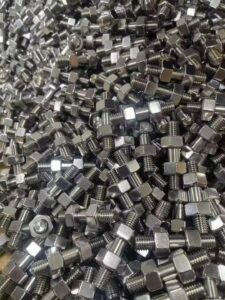
A: Normally they match standard heavy‑series hex nuts such as ASTM A194 stainless steel nuts. Matched nuts guarantee designed clamping load and anti‑seize performance for valve flange joints.
Q: Will stainless steel double‑end studs get thread galling during installation?
stainless steel double‑end stud bolts and matching heavy hex nuts | stainless steel stud bolts for valves with matching heavy hex nuts
A: Stainless‑steel threads are easy to suffer galling under high‑speed tightening. Applying anti‑seize compound and controlling tightening speed will greatly lower this risk.
Final Thoughts on Stainless Steel Stud Bolts for Valves
Valve manufacturers favor stainless steel stud bolts for valves, particularly double‑end stud styles with threads on both ends and middle plain shank. This preference comes from real‑world production and site operation experience, not random selection.
Time‑saving assembly, well‑balanced stress bearing, anti‑loosening sealing performance and comprehensive cost advantages make these studs the preferred fastening solution for flange‑type valves.
Whether you work as a valve manufacturer, pipeline contracting engineer or equipment maintenance provider, understanding features of stainless steel stud bolts for valves helps you make better fastener purchasing decisions for your projects.