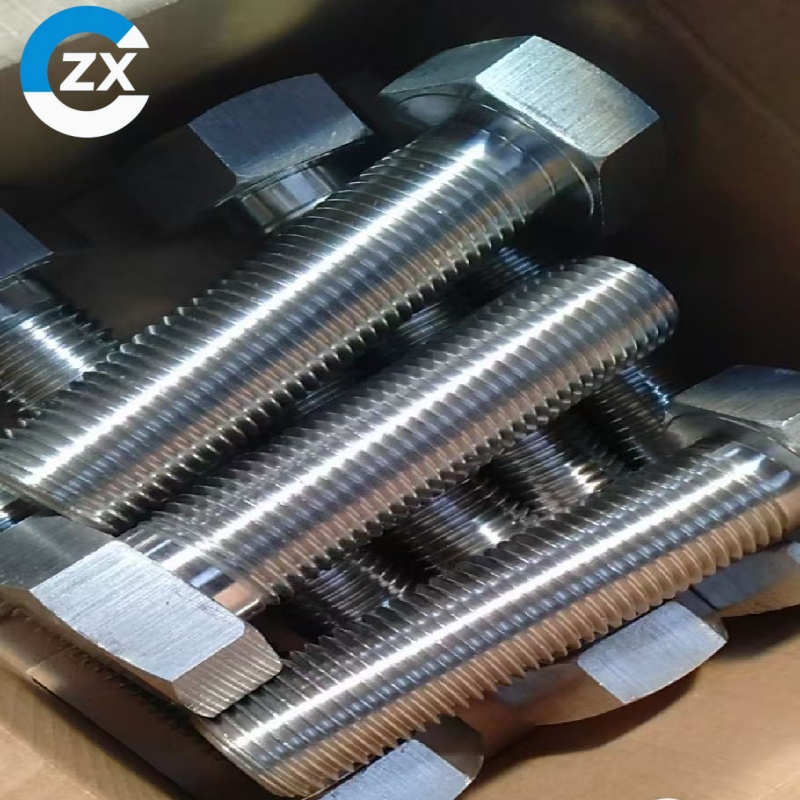
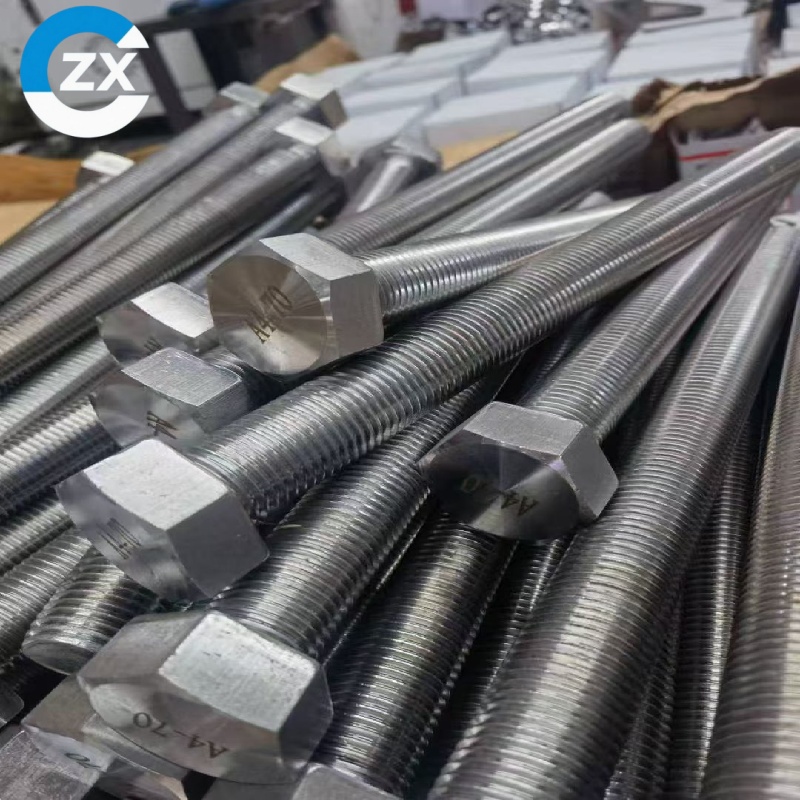
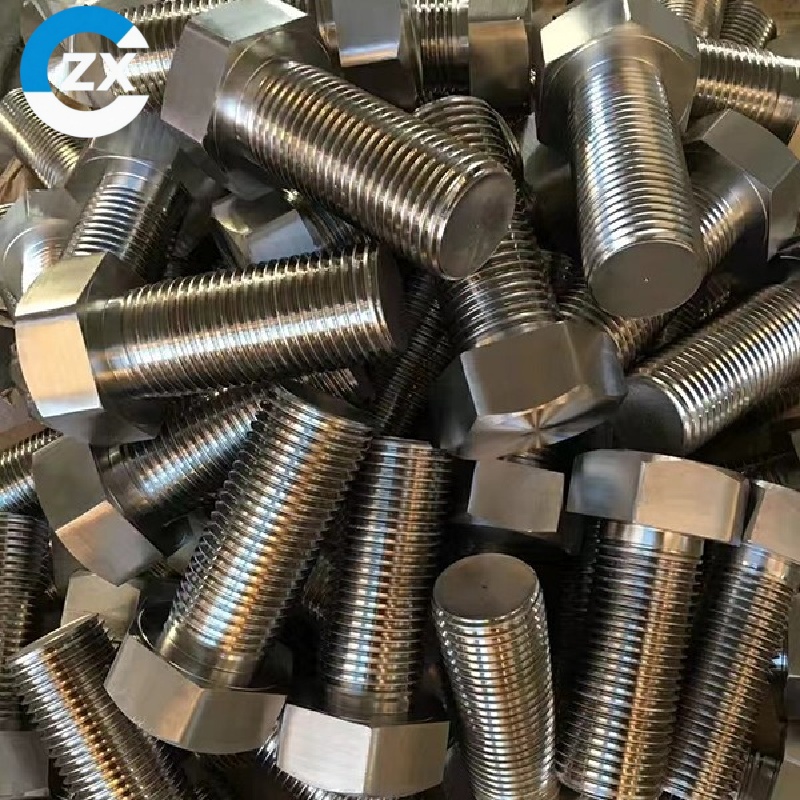
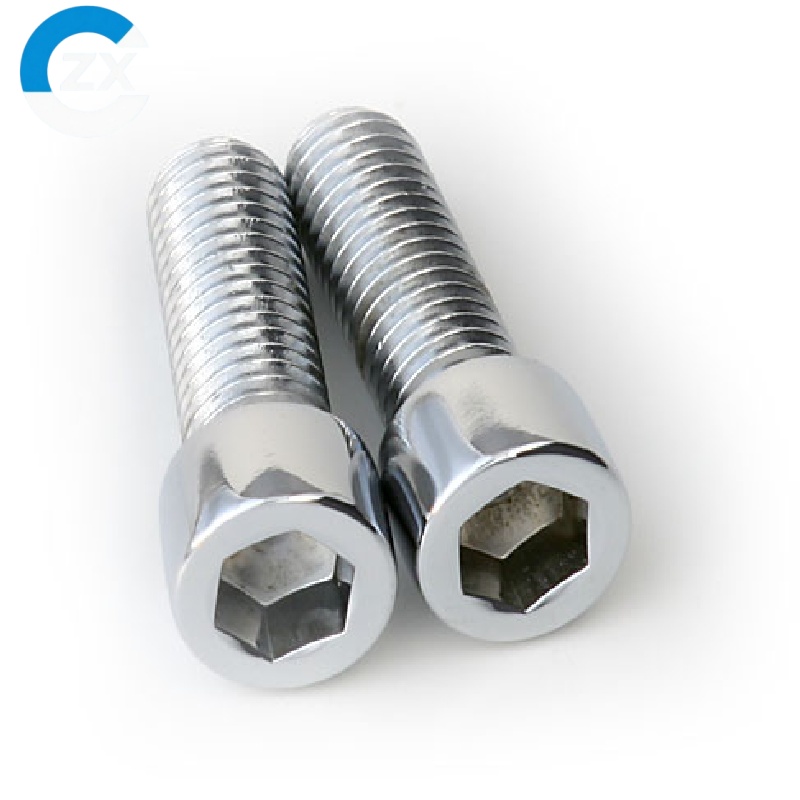
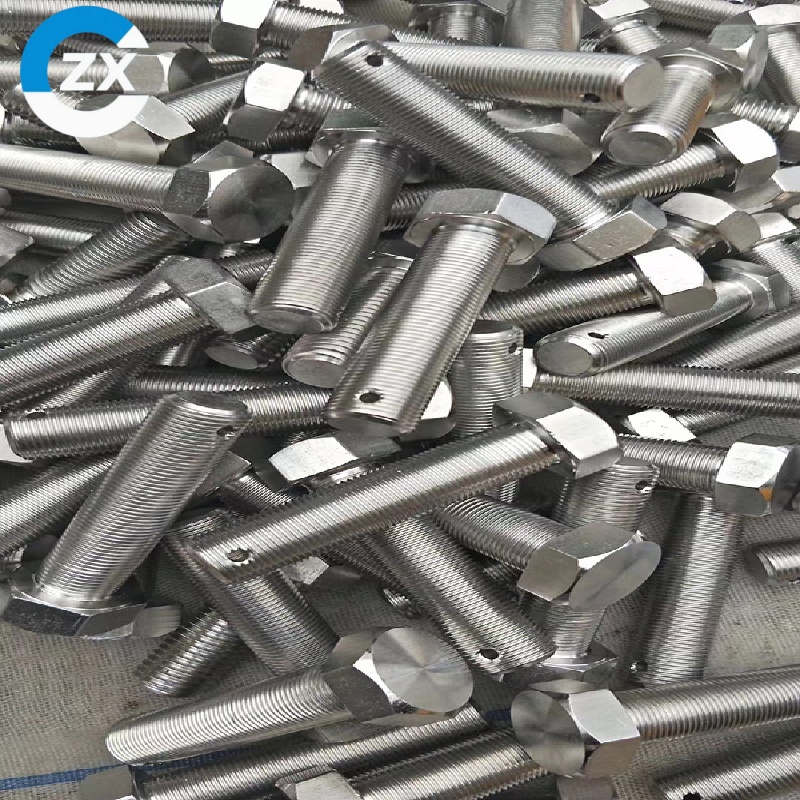
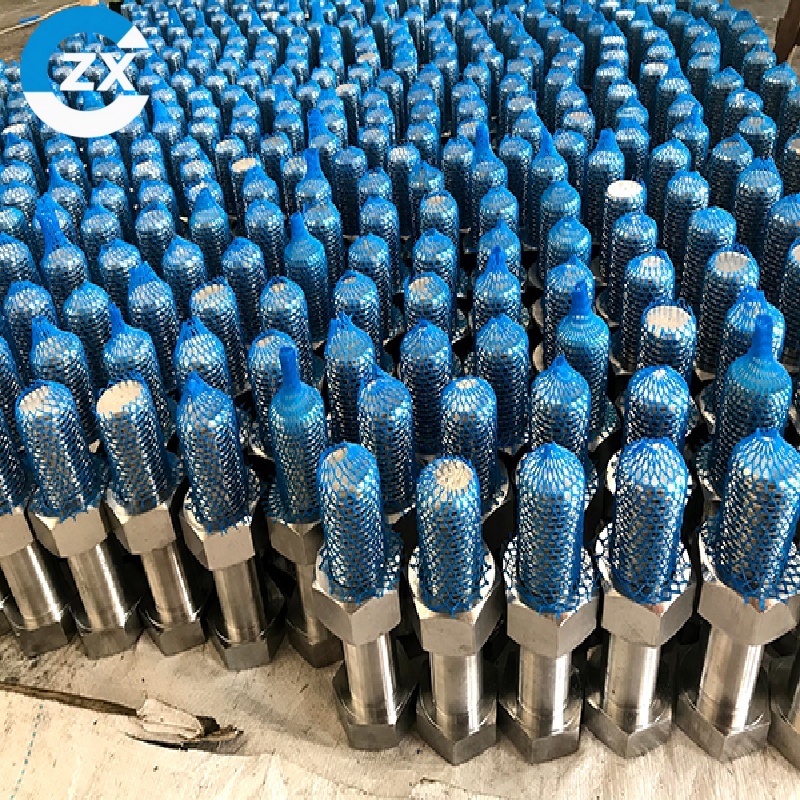
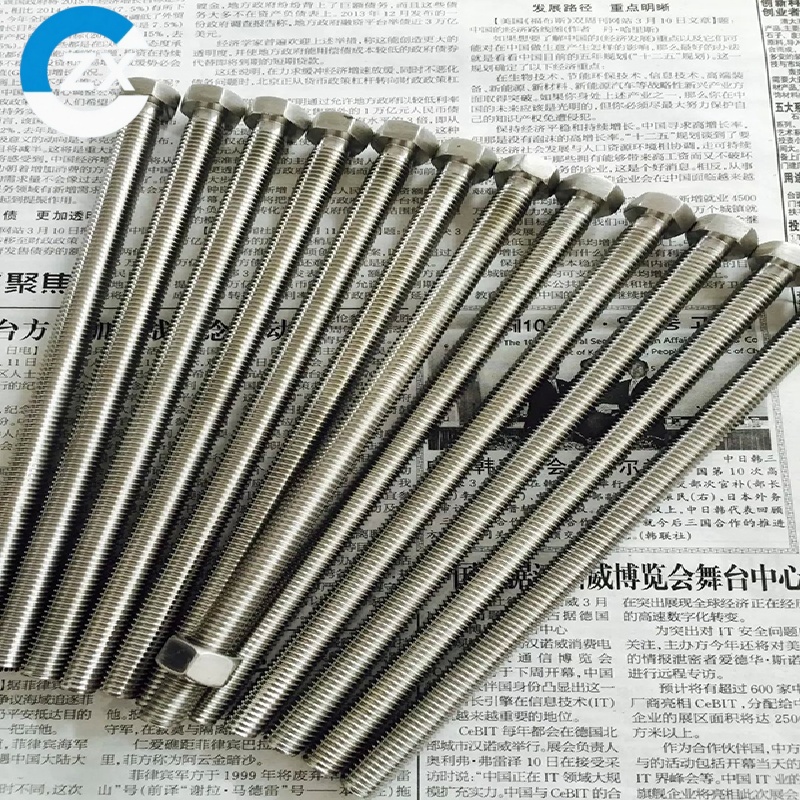
Stainless steel hex bolts are precision-forged fasteners featuring a hexagonal head and partially or fully threaded shank, designed for secure, high-strength assembly with nuts in demanding industrial applications. Unlike threaded rods, hex bolts provide a built-in driving surface for wrenches or sockets, enabling torque-controlled installation without requiring access to both sides of the joint. Their robust design makes them ideal for structural, mechanical, and sanitary systems where reliability, corrosion resistance, and ease of maintenance are critical.
Stainless steel hex bolts (hexagon head bolts) are high-strength fasteners featuring a six-sided head and threaded shank. Designed for superior corrosion resistance and structural integrity, they secure critical joints in machinery, infrastructure, and equipment across industries.
Materials The most widely specified grades are:
A2-70 (AISI 304): Austenitic stainless steel with 18% chromium and 8% nickel; offers excellent general corrosion resistance and formability.
A4-80 (AISI 316): Enhanced with 2–3% molybdenum, providing superior resistance to chlorides, acids, and marine exposure.
A4-80 (316L): Low-carbon variant of 316, minimizing carbide precipitation during welding for improved weldability in thick sections.
These materials conform to ISO 3506-2 and ASTM F593 for chemical composition and mechanical performance. Martensitic grades like 410 are rarely used in hex bolts due to lower corrosion resistance.
Production Standards
Stainless steel hex bolts are manufactured to meet globally recognized standards:
ISO 4017: Specifies dimensions, mechanical properties, and testing for hexagon head bolts with partial or full thread.
DIN 931: Defines full-threaded hex bolts with precise head geometry and thread length tolerances.
ASTM F593: Covers mechanical and chemical requirements for stainless steel fasteners, including tensile and yield strength benchmarks.
GB/T 5782 / JIS B1180: Chinese and Japanese equivalents aligned with ISO 4017.
All production batches include Mill Test Reports (MTRs), dimensional verification, and batch traceability per ISO 9001.
Product Characteristics Tensile Strength:
A2-70: ≥520 MPa A4-80: ≥620 MPa
Corrosion Resistance: Passes 500+ hours of neutral salt spray test (ASTM B117) without red rust. A4-80 resists pitting in seawater and chloride-rich environments.
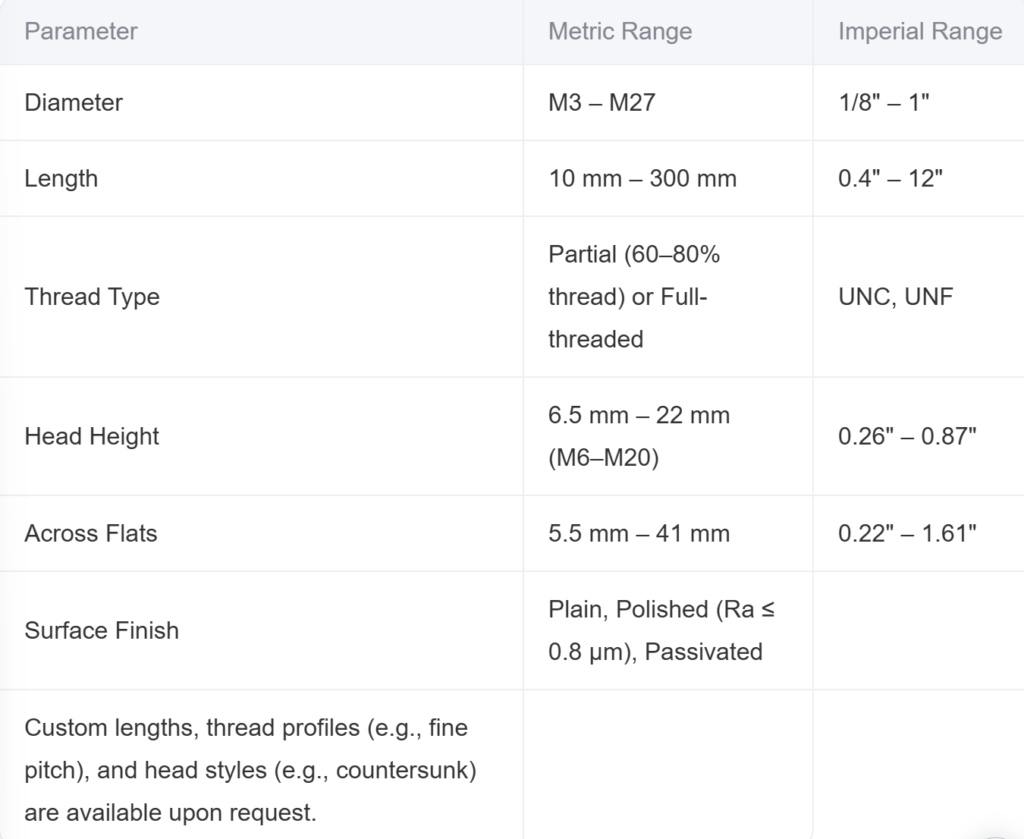
Surface Treatments: Plain Finish: As-forged, no coating – cost-effective for internal use. Polished Finish: Mirror-like surface (Ra ≤ 0.8 μm) – ideal for food, pharma, and architectural applications.
Passivation: Chemical treatment (ASTM A967) to remove free iron and enhance passive oxide layer.
Thermal Performance: Stable up to 800°C (A4-80); retains strength under thermal cycling.
Magnetic Response: Austenitic grades (A2/A4) are non-magnetic in annealed state; slight magnetism may occur after cold working but does not affect performance.